Ekadashi Vrat Katha · Shukla Paksha · Margashirsha

    Mokshada Ekadashi

    मोक्षदा एकादशी

    Sunday, 20 December 2026

    In 114 days

    What is Mokshada Ekadashi?

    Grants liberation; coincides with Gita Jayanti — the story of King Vaikhanasa.

    Mokshada Ekadashi Vrat Katha

    Retold by One Mandir · verified 2026-08-06 · 5 sources

    After hearing the origin and glory of Utpanna Ekadashi, Arjuna said, "O revered Lord Shri Krishna! O master of the three worlds! You grant happiness and liberation to all. I bow to you. O Lord! You are merciful. Please calm down one of my curiosities."

    Lord Shri Krishna replied, "O Arjuna! Whatever you wish to know, speak fearlessly. I will certainly resolve your curiosity."

    Arjuna said, "O Lord! What you have told me about the Ekadashi of the Krishna Paksha in the month of Margashirsha has brought me great peace. Now, please be kind and tell me about the Ekadashi that falls in the Shukla Paksha of the month of Margashirsha. What is its name? Which deity is worshipped on that day and what is the method of worship? What results does a person attain by observing the fast of that Ekadashi?"

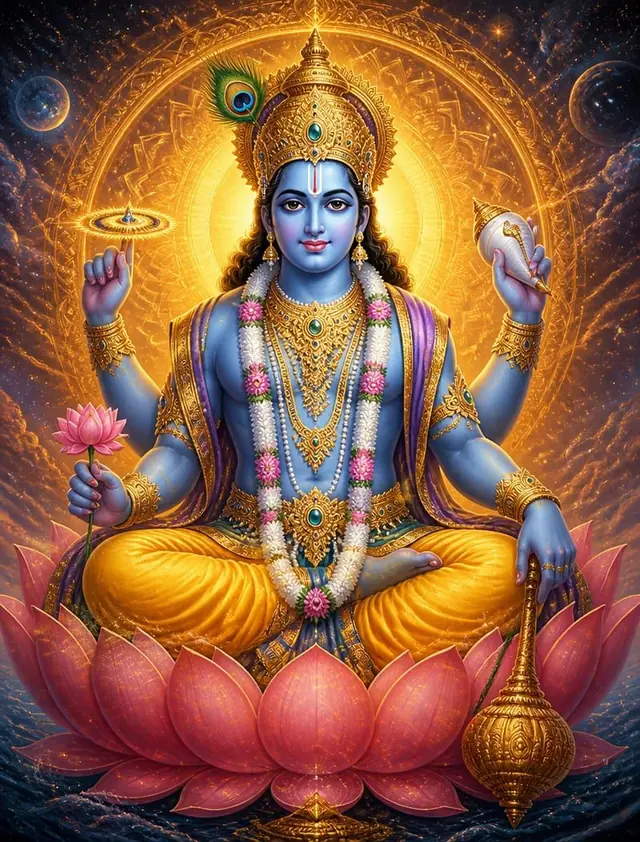
    Lord Shri Krishna said, "O Arjuna! You have asked a very noble question and because of this, your glory will spread in the world. The Ekadashi of the Shukla Paksha in the month of Margashirsha destroys many kinds of sins. In the world, it is known as Mokshada Ekadashi. On this Ekadashi, Lord Shri Damodara should be worshipped devoutly with incense, lamps, offerings and other rituals. O son of Kunti! By the virtue of observing the fast of this Ekadashi, parents, ancestors and relatives who have fallen into hell attain salvation and reach heaven."

    The story runs thus. There was a king named Vaikhanasa who ruled over an ancient city, in whose kingdom lived Brahmins well versed in all four Vedas, and who cared for his subjects as though they were his own children. One night the king saw his father enduring the torments of hell in a dream. The vision troubled him deeply, and he waited anxiously for the morning.

    As soon as dawn broke he summoned the Brahmins and told them the dream: "O Brahmins! Last night, in a dream, I saw my father suffering the torments of hell. He said to me, 'O son! I am enduring extreme suffering in hell. Please rescue me from here.' Since hearing these words, I have been deeply disturbed. I no longer find any joy in my kingdom, wealth, luxuries, elephants, horses, riches, wife or children. What should I do now? Where should I go? My body is burning with anguish because of this sorrow. Please suggest some penance, charity, fast or any other way by which my father can attain liberation. If I do not make an effort to free my father from the torments of hell, my life will be meaningless. A person whose father is suffering in hell has no right to enjoy any happiness on this earth."

    The Brahmins deliberated among themselves and said with one voice, "O King! There is a sage named Parvata, who is knowledgeable about the past, present and future. He is not far from here. Go to him and share your grievance; he will certainly provide you with a simple solution."

    The king went to the hermitage, where many tranquil-minded yogis and sages were engaged in penance, and where Parvata Muni, versed in all four Vedas, appeared as though he were another incarnation of Lord Brahma. The king prostrated before him and introduced himself, and the sage asked after his well-being. The king replied, "O revered sage! By your grace, all is well in my kingdom. However, an unexpected problem has arisen that has left my heart deeply troubled." Then he told the whole anguish of his dream, and asked, "O great sage! Kindly guide me, what should I do in this situation? How can I liberate my father from the torment of hell?"

    Parvata Muni listened intently, and then, closing his eyes, saw by his yogic vision what the king's father had done in his past life. He told the king that his father had committed a grave sin, and that there was one remedy: the king should observe the fast of Mokshada Ekadashi, of the Shukla Paksha of Margashirsha, and give the merit of that fast to his father, and by it his father would be freed.

    The king returned and observed the fast of Mokshada Ekadashi with his wife, his sons and his kin, exactly as the sage had prescribed, and gave its whole merit to his father. As soon as the merit was offered, flowers rained down from the sky, and his father was released from hell and rose to heaven, saying to his son as he went, "O son, may you be blessed."

    Mokshada means the giver of moksha; whoever keeps this fast liberates their ancestors from suffering and attains liberation themselves. This Ekadashi also carries the memory of the day the Lord spoke the Gita to Arjuna on the field of Kurukshetra, and is therefore observed as Gita Jayanti.

    This katha has been edited by One Mandir for readability only. The names, numbers, places, sequence of events and the words spoken by the deities and sages are reproduced as they appear in the sources below — nothing has been added, removed or reinterpreted. Compiled from publicly available published sources and cross-verified across at least three of them. Please read the original texts at the links provided.

    यह कथा केवल पठनीयता के लिए वन मंदिर द्वारा संपादित की गई है। नाम, संख्याएँ, स्थान, घटनाओं का क्रम तथा देवताओं और ऋषियों के कहे गए वचन नीचे दिए गए स्रोतों के अनुसार ही हैं — कुछ भी जोड़ा, हटाया या बदला नहीं गया है। सार्वजनिक रूप से उपलब्ध प्रकाशित स्रोतों से संकलित तथा कम से कम तीन स्रोतों से सत्यापित। कृपया दिए गए लिंक पर मूल पाठ अवश्य पढ़ें।

    Puja Vidhi

    1. 1Dashami (day before): one satvik meal before sunset; no grains from evening.
    2. 2Ekadashi morning: bathe, then take the sankalp (vow) before Vishnu.
    3. 3Offer tulsi leaves, fruit, incense, a ghee lamp and yellow flowers.
    4. 4Chant 'Om Namo Bhagavate Vasudevaya'; read the Ekadashi katha.
    5. 5Fast per your capacity — nirjala (waterless), phalahar (fruit), or one satvik meal.
    6. 6Jagaran — stay awake through the night in bhajan and kirtan.
    7. 7Dwadashi: break the fast within the parana window, after giving food in charity.

    क्या करें · Do's

    • सूर्योदय से पूर्व स्नान और संकल्प।
    • तुलसी दल अर्पित करें — किंतु एकादशी के दिन तुलसी न तोड़ें (एक दिन पूर्व तोड़ लें)।
    • विष्णु सहस्रनाम या 'ॐ नमो भगवते वासुदेवाय' का जप।
    • एकादशी कथा का सस्वर पाठ।
    • अन्न, वस्त्र या दक्षिणा का दान।
    • सत्य, संयम और क्षमा का पालन।

    क्या न करें · Don'ts

    • अन्न वर्जित — विशेषकर चावल का पूर्ण त्याग।
    • प्याज, लहसुन और मांसाहार वर्जित।
    • मद्य व नशा वर्जित।
    • एकादशी के दिन तुलसी पत्र न तोड़ें।
    • दिवा-शयन (दिन में सोना) वर्जित।
    • क्रोध, कटु वचन, निंदा और कलह से बचें।
    • बाल/नाखून न काटें; क्षौर कर्म वर्जित।
    • पारण मुहूर्त के बाहर व्रत न खोलें।
    ← All 24 Ekadashi dates of 2026